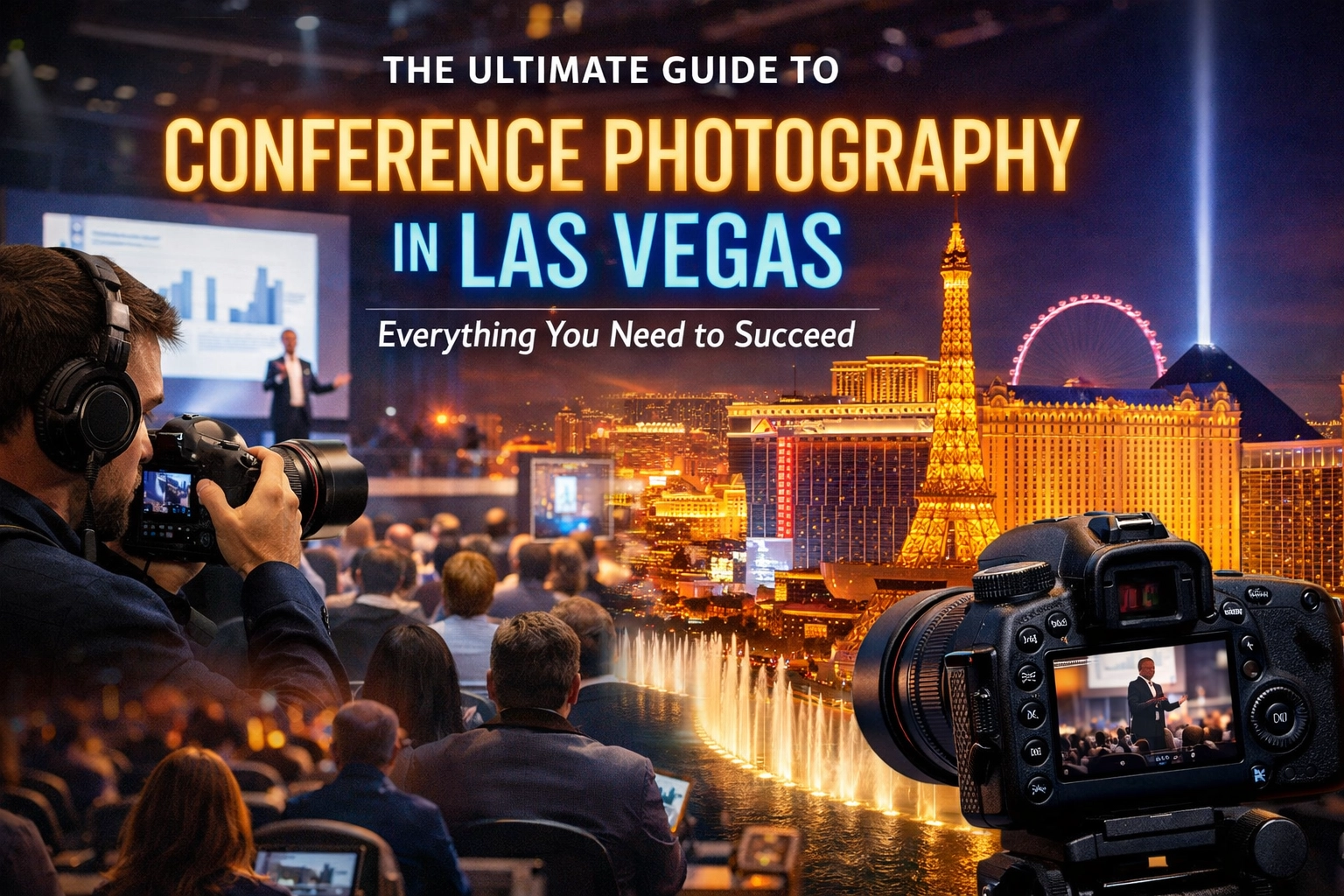
Las Vegas stands as the undisputed capital of the global meeting industry, hosting thousands of high-stakes activations annually. From the sprawling halls of the Las Vegas Convention Center to the opulent ballrooms of the Venetian and Caesars Palace, the scale of these events demands a specialized approach to corporate event photography. Success in this environment requires more than just a camera; it necessitates a deep understanding of logistical complexities, technical lighting challenges, and the high-speed tempo of the desert’s premier business hubs.
The Technical Arsenal: Gear for High-Volume Success
The sheer scale of Las Vegas venues means your equipment must be both versatile and reliable. A professional conference photographer cannot afford a gear failure when a CEO takes the stage at the Mandalay Bay.
- Dual Body Systems: Always carry two full-frame camera bodies. This prevents downtime during lens changes and provides an immediate backup. High-resolution sensors are preferred for executive portrait photography often required during these events.
- The Trinity of Lenses: Utilize a 16-35mm f/2.8 for wide venue shots, a 24-70mm f/2.8 for general coverage, and a 70-200mm f/2.8 for stage captures from the back of the room. A fast 85mm or 50mm prime is essential for mastering business luncheon photography where light is often dimmed for atmosphere.
- External Lighting: Vegas ballrooms are notorious for "muddy" light. Carry professional-grade speedlights with TTL capabilities and portable softboxes. Use these to fill shadows during mastering corporate panel discussion photography to ensure every speaker looks their best.

Alt text: A professional event photographer using a telephoto lens to capture a keynote speaker on a large stage in a Las Vegas ballroom, showing the scale of the audience and professional lighting setup.
Navigating the Las Vegas Venue Landscape
Every venue in Las Vegas offers a unique set of challenges. An event photographer must adapt their strategy based on the specific architecture and lighting of the space.
- The Mega-Convention Centers: Sites like the LVCC or Mandalay Bay North require significant walking. Wear professional but comfortable footwear. Capture the "Grand Scale" shot: a wide-angle view from a high vantage point to show the density of the crowd.
- Hotel Ballrooms: Places like the Wynn or Bellagio often feature warm, tungsten-heavy lighting or vibrant LED accents. Calibrate your white balance frequently. When providing corporate photography services, ensuring consistent skin tones across different rooms is a hallmark of professional quality.
- Outdoor Transitions: Many Vegas events move between indoor conferences and outdoor receptions. Be prepared for the intense desert sun, which creates harsh shadows. Use fill flash to balance the exposure when shooting mastering team building event photography by the pool or on a terrace.
Mastering Lighting: Overcoming the Ballroom Blues
Lighting is the primary hurdle in conference photography. Most venues rely on a mix of overhead LED, stage spotlights, and ambient "vibe" lighting, which can create a nightmare for color grading.
- Stage Lighting Strategy: Coordinate with the A/V team. If the stage uses heavy blue or purple washes, ask if they can add a "clean" white key light on the speakers. This ensures your conference videography and stills remain professional.
- High ISO Management: Modern mirrorless cameras allow for clean images at ISO 3200 or 6400. Do not be afraid to push the ISO to maintain a fast shutter speed, especially during energetic mastering corporate holiday party photography or awards ceremonies.
- Bouncing Flash: In rooms with low, white ceilings, bounce your flash to create a soft, natural light source. In high-ceiling convention halls, use a flash modifier (like a MagMod or a Rogue Grid) to direct light specifically onto your subjects.
Strategic Shot Lists: Capturing the Story
A successful event videographer or photographer doesn't just take pictures; they document a narrative. To provide top-tier event videography services, you must identify the "hero" moments before they happen.
- The Keynote: Capture the "Power Pose" of the speaker, the reaction of the audience, and a wide shot that includes the event branding. For more details on this, see our guide on mastering annual meeting photography.
- The Networking: Focus on genuine interactions. Use a longer lens (70-200mm) to stay back and capture candid laughter and handshakes without intruding on the conversation. This is vital for mastering business conference photography.
- Branding and Signage: Clients spend thousands on floor graphics, banners, and digital displays. Document these clearly. These shots are essential for the client's future marketing and ROI reports.
- VIP and Awards: Ensure you have a clear line of sight for mastering corporate awards photography. Speed is key here; you must capture the handshake and the trophy presentation in a split second.

Alt text: A high-angle candid shot of attendees networking at a corporate event in Las Vegas, focusing on diverse professionals engaged in conversation with branded signage in the background.
Integrated Event Video Production
In 2026, stills are only half the story. Most major conferences in cities like Las Vegas, Orlando, or Chicago now require integrated event video production.
- B-Roll Excellence: Capture the movement of the crowd, the flickering of the stage lights, and the "vibe" of the city. For high-quality event videography services, use gimbals to get smooth, cinematic walking shots through the trade show floor.
- Sizzle Reels: Plan for a 60-second "sizzle" that can be edited and posted within 24 hours of the event closing. This requires a dedicated corporate event videographer who understands the pace of social media.
- Interviews and Testimonials: Set up a quiet corner for "man on the street" interviews. High-quality audio is more important than 4K video here: use a dedicated lavalier or shotgun microphone.
The Importance of Trade Show Presence
Las Vegas is the world leader in trade shows like CES and NAB. Managing mastering trade show photography requires a specific set of skills.
- Booth Documentation: Capture the booth from multiple angles before the floor opens to show the clean design.
- Engagement Shots: Once the show floor is live, photograph staff interacting with attendees and product demonstrations. This is particularly important for mastering product launch event photography.
- The "Fish-Eye" Perspective: Occasionally, a specialized wide-angle or fish-eye lens can capture the overwhelming scale of a massive booth in a single frame.
Logistical Mastery: Beyond the Camera
Being a top-tier event photographer in a major hub like Los Angeles, New York, or Las Vegas means managing the logistics of a large-scale production.
- Real-Time Delivery: Clients now expect "instant" photos for social media. Utilize cameras with built-in Wi-Fi or FTP capabilities to send selects to a social media manager in real-time. For professional workflows, check out ProShoot.io for streamlined asset management.
- On-Site Editing: For multi-day conferences, having an editor on-site ensures that a daily highlight gallery is ready for the morning's opening remarks.
- Backup and Redundancy: Never leave a venue without backing up your cards to a portable SSD. Las Vegas events are often "one-shot" opportunities; there are no do-overs for a mastering executive roundtable photography session.
Specific Considerations for Las Vegas Venues
When booking corporate photography services in Nevada, keep these specific venue tips in mind:
- The Venetian/Palazzo: These venues have a high volume of "Themed" architecture. Use the unique Italian-inspired backgrounds for executive portrait photography to give the photos a sense of place.
- Caesars Forum: A newer, massive space with incredible natural light in the foyers. Plan your group shots here to take advantage of the floor-to-ceiling windows.
- Allegiant Stadium: Increasingly used for massive corporate galas. Lighting here is stadium-grade, meaning you'll need to account for high-flicker rates in your shutter speed settings for mastering company gala photography.

Alt text: An on-site editing station at a Las Vegas conference where a professional editor is processing event photos and videos in real-time for immediate social media distribution.
Why Professionalism Matters
In the world of business event photography, your conduct is as important as your portfolio. You are representing the client on the floor.
- Dress Code: Always match or exceed the event's dress code. If it’s business formal, wear a suit. If it's "Vegas Casual," a professional polo and slacks are standard.
- Discretion: A great corporate event videographer knows how to be invisible. Do not block the view of paying attendees. Use your zoom lens to stay out of the way of the front row.
- Coordination: Work closely with the event planners. Understand the schedule for mastering corporate retreat photography or mastering business luncheon photography to ensure you are in position five minutes before every key moment.
Post-Event Success: Delivery and Longevity
The job isn't over when the lights go down at the MGM Grand. The post-production phase is where you solidify your value as a conference photographer.
- Culling for Quality: Don't dump 5,000 unedited photos on a client. Curate a story. Select the best 200–500 images that cover the entire breadth of the event.
- Color Consistency: Use a consistent color grade that matches the client’s brand guidelines. This is especially important for mastering company anniversary photography.
- Archive and Access: Provide the client with a secure, long-term gallery link. Using platforms like ProShoot.io allows for easy sharing and high-resolution downloads for years to come.
Whether you are covering a mastering corporate charity event photography session or a high-level mastering executive roundtable photography meeting, the key to success in Las Vegas is a blend of technical mastery, logistical foresight, and a relentless focus on the client's marketing goals. By following these prescriptive standards, you ensure that every shutter click contributes to a successful, professional narrative. For more expert insights, explore our full library of articles and tips on mastering the art of corporate visual storytelling.