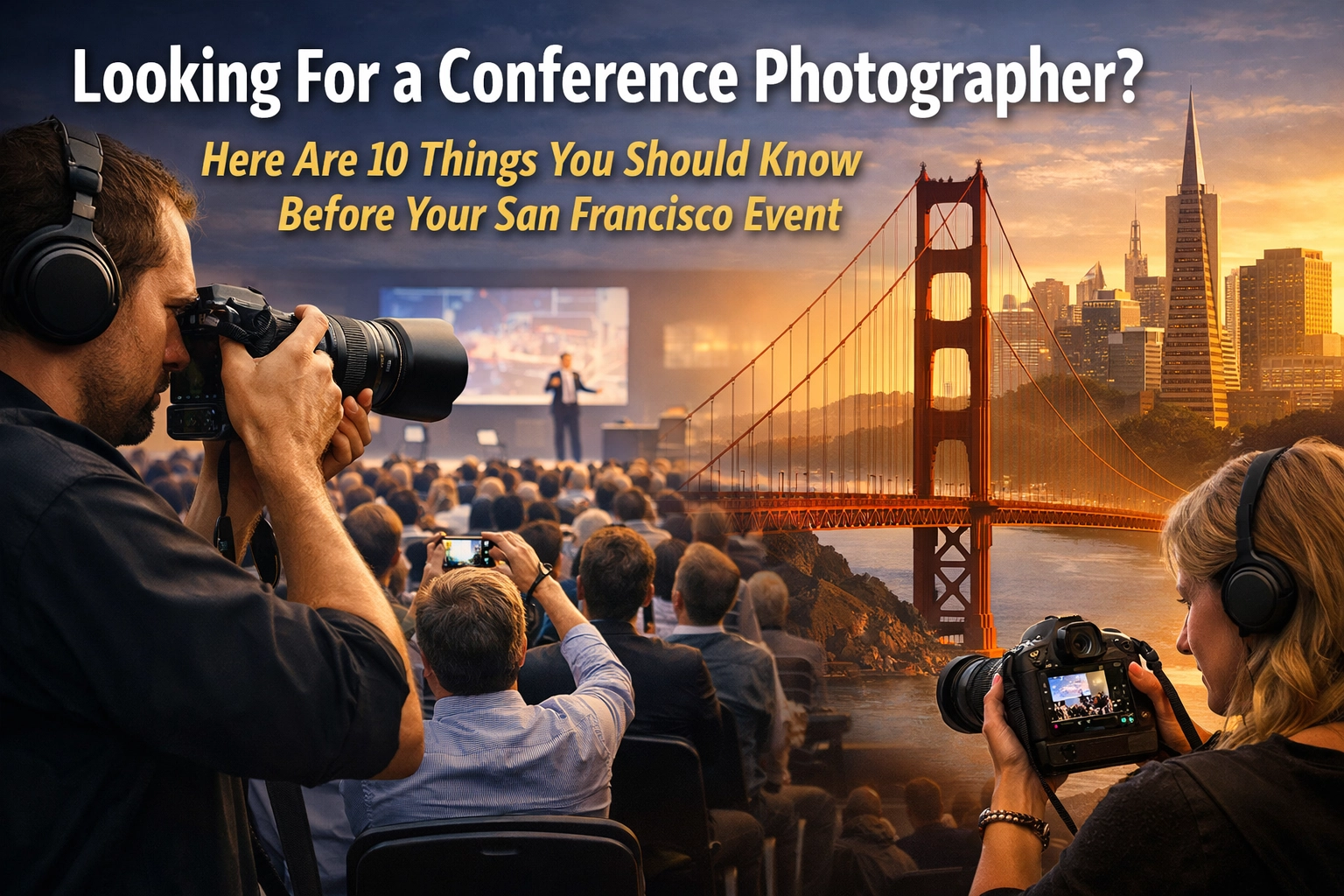
San Francisco is a global hub for innovation, which makes it one of the most high-stakes environments for hosting a business gathering. Whether you are taking over the Moscone Center or hosting an intimate executive summit at the Fairmont, the visual record of your event is your most valuable post-event asset. Hiring a conference photographer in a city like this isn't just about finding someone with a camera; it’s about finding a partner who understands the rhythm of the Bay Area’s corporate culture.
At Corporate Pixels, we’ve seen how the right imagery can transform a simple recap into a powerful marketing engine. Here are 10 things you need to know before you sign a contract for your next San Francisco event.
1. Master the Complexity of San Francisco Lighting
San Francisco venues are famous for their architectural diversity, but that diversity creates a nightmare for the uninitiated. You might be dealing with the massive, sun-drenched glass walls of the Chase Center one hour and the moody, subterranean lighting of a hotel ballroom the next.
A professional event photographer must know how to balance "mixed lighting." This occurs when you have warm indoor lights clashing with cool natural light or, even worse, the blue tint of giant LED stage screens. If your photographer doesn't have the gear or the experience to compensate for these shifts, your keynote speakers will end up looking like they have neon-blue skin. When vetting talent, ask to see examples of their work in high-contrast environments. You want to see crisp, natural skin tones even when a 40-foot screen is glowing directly behind the subject.
2. Prioritize a Strategic Shot List
A conference is more than just a series of speeches. It is a brand story. Before the first attendee checks in, you need to define what success looks like visually. Are you trying to sell sponsorships for next year? Then you need wide shots showing a packed house and close-ups of happy sponsors at their booths. Are you focused on thought leadership? Then the priority shifts to dynamic "hero" shots of your speakers in action.
Your corporate photography services should include a consultation to build a priority list. We often recommend focusing on:
- Scale: High-angle shots showing the sheer volume of attendees.
- Engagement: "Real" moments of networking, not just posed handshakes.
- Branding: Clean shots of your environmental graphics and signage.

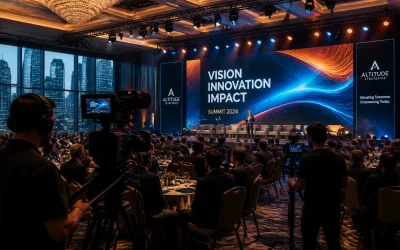
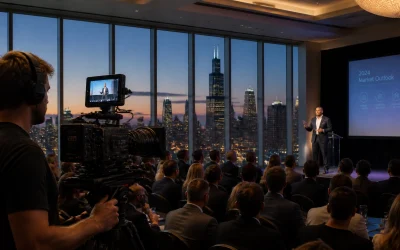
Alt text: A professional event photographer capturing a wide-angle shot of a crowded tech conference keynote in a modern San Francisco venue.
3. Venue Expertise is a Logistics Game-Changer
San Francisco is a logistical puzzle. From the traffic on Market Street to the strict load-in schedules at the Moscone Center, hiring someone local who knows the layout of these venues is a massive advantage.
A photographer who has worked at your specific venue before already knows where the "power spots" are. They know which balcony offers the best view of the trade show floor and which breakout rooms have the most flattering natural light. This expertise allows them to move faster and stay ahead of the schedule. If you’re planning a more traditional gathering, you might find our insights on mastering annual meeting photography helpful for navigating these large-scale environments.
4. Specialization Beats Generalization Every Time
It is tempting to hire a local wedding or portrait photographer because they have a great "vibe," but corporate events are a different beast. A conference photographer needs to be a fly on the wall, a logistics expert, and a technical wizard all at once.
Corporate event photography requires a specific temperament. You need someone who knows how to navigate a room full of CEOs without being intrusive. They need to understand the flow of a multi-day schedule and have the endurance to stay sharp during a 12-hour day. While a generalist might be cheaper, a specialist understands that missing a 30-second award presentation is not an option. For more on the technical side of this, check out our guide on mastering corporate event photography.
5. Right-Size Your Team for Multi-Track Sessions
If your event has 500+ attendees or features multiple simultaneous breakout sessions, one person cannot cover it all. You can’t be in the main hall for the keynote and in a third-floor boardroom for a VIP roundtable at the same time.
For large-scale San Francisco events, we often deploy teams of two or three photographers and at least one corporate event videographer. This ensures that no part of your programming is left undocumented. If you are also looking for high-end video production, partnering with an agency that offers integrated event videography services is essential. You can find comprehensive teams through platforms like Proshoot, which specialize in connecting businesses with elite visual talent.
6. Communication and Pre-Event Coordination
The best photos are rarely accidents; they are the result of meticulous planning. Your photographer should have access to your "Run of Show" (ROS) at least a week in advance.
Key information to share includes:
- VIP Identification: Provide headshots of your executive team and keynote speakers so the photographer can find them in a crowded room.
- Floor Plans: Highlight specific areas where important interactions will happen.
- Media Access: Ensure your event photographer has the necessary badges to go backstage or into restricted areas to get those exclusive behind-the-scenes angles.

Alt text: A corporate event videographer and photographer coordinating with an event planner over a digital schedule during a San Francisco business summit.
7. Professional Equipment and Backups
In the world of corporate event photography, gear failure is the ultimate sin. San Francisco’s high-tech environment demands high-tech solutions. Professional-grade mirrorless cameras are now the standard because they feature "silent shutters." This allows the photographer to take hundreds of photos during a quiet, intimate keynote without the distracting "click-click-click" of an older DSLR.
Furthermore, backup gear is non-negotiable. A professional should always have at least two camera bodies on their person and a variety of lenses (from wide-angle to telephoto). If you’re also investing in event video production, ensure the team has external audio recorders and stabilized gimbals to handle the fast-paced movement of a trade show floor.
8. Capturing the "Vibe" Beyond the Podium
While the speakers are the main draw, the true value of a conference often happens in the hallways. Networking, spontaneous collaboration, and the energy of the "expo floor" are what make an event feel alive.
We encourage our clients to look for business event photography that captures these candid moments. This requires a photographer with a "journalistic" eye: someone who can spot a laugh between two industry leaders or the intense focus of a workshop participant. These are the images that perform best on social media and in your marketing brochures. If your event includes a social component, you might want to look at our tips for mastering company gala photography.
9. Understanding the Pricing Structure in the Bay Area
San Francisco is one of the most expensive markets in the world, and photography rates reflect that. When you receive a quote for corporate photography services, you aren't just paying for the hours spent on-site. You are paying for:
- Pre-production: Planning, scouting, and meetings.
- Equipment: Tens of thousands of dollars in high-end gear.
- Post-production: The hours spent culling, color-correcting, and editing the final gallery.
- Insurance: A professional team should carry at least $2M in liability insurance, which many San Francisco venues (like the Moscone) require.
Expect to see day rates that reflect this level of professionalism. Investing in quality ensures you don't end up with blurry, unusable photos that waste your entire event budget.
10. Rapid Delivery for Social Media
In 2026, the lifespan of a "trending" topic is measured in hours, not days. If your conference ends on Thursday, but you don't get your photos until the following Wednesday, you’ve missed the peak window for engagement.
Ask your conference photographer about their "Social Media Selects" policy. Many top-tier pros can deliver a "best of" gallery of 20-50 edited images within 24 hours (or even same-day) so your marketing team can blast them out on LinkedIn and X while the event is still fresh in everyone's mind. For the full gallery, a 3-5 business day turnaround is standard. If you need even faster results, many Proshoot professionals offer on-site editing services.

Alt text: A digital workstation at a San Francisco conference where an editor is processing corporate photography services images for immediate social media delivery.
Integrating Video for Maximum Impact
While photography is essential, adding conference videography to your package can double your ROI. A highlight reel or "sizzle" video is the most effective tool for selling tickets to your next event. When you hire a corporate event videographer, they can capture testimonials from attendees, snippets of the most impactful speeches, and the general atmosphere of the venue.
At Corporate Pixels, we specialize in high-end corporate event photography and video, ensuring your brand looks as innovative and professional as the San Francisco backdrop itself. Whether you're hosting a small executive portrait photography session on the Embarcadero or a multi-day tech fest, the details matter.
Hiring the right team isn't just a line item on your budget; it’s an insurance policy for your brand's reputation. Make sure your photographer knows the city, knows the tech, and most importantly, knows how to tell your story.