Optimal Locations for Night Photography in Las Vegas
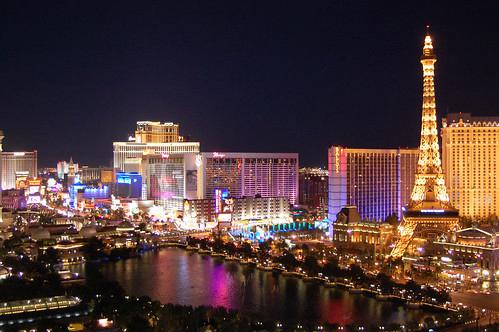
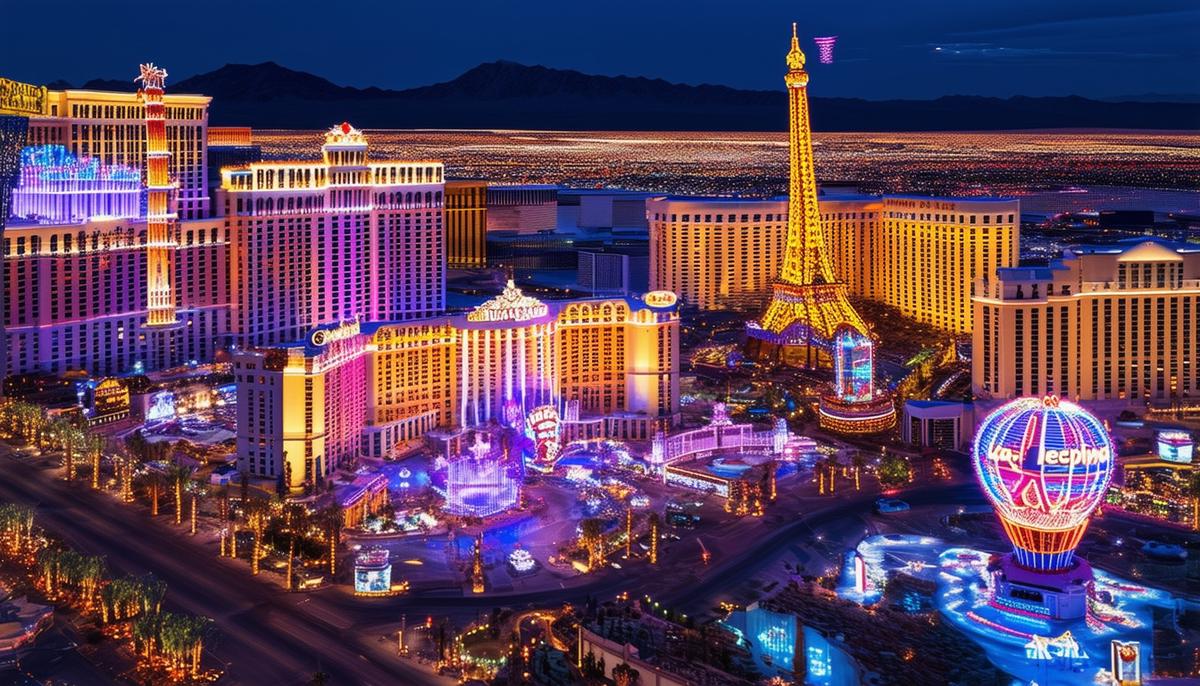
The Las Vegas Strip after sundown whisks photographers into a realm of neon vibrancy. The Bellagio parking garage, overlooking the iconic fountains and the Paris Las Vegas's Eiffel Tower replica, is a popular spot. Night owls benefit from less crowded scenes and a sky shifting through hues of twilight blue to deep indigo.
Lesser-known locations can be equally rewarding. The Foundation Room at Mandalay Bay elevates you to catch sweeping shots of the shimmering skyline, while Skyfall Lounge provides a relaxed ambiance. The tops of parking structures like those at The Cosmopolitan offer panoramic vistas.
Local photographers often hint at insider gems:
- The walkway bridge connecting Excalibur to Tropicana offers a close view of the Luxor's sky-piercing light beam.
- Setting up near the Aria's Fountain rings can capture the water's hypnotic dance and electric play of lights.
- For serene moments, VooDoo Lounge at Rio lays out the Strip in a visual feast from the west.
- The less trodden paths around vintage spots like Neon Museum allow shutterbugs to intertwine Las Vegas's colorful past with its present dazzle.
Visiting on a slower weekday can showcase Vegas dressed in its undisturbed elegance. Unpredictable events like shows letting out or impromptu street performances render slices of city life that represent the heartbeat of Las Vegas. Every sudden burst of traffic or flicker of neon against a building casts new shadows and beams new stories.
Techniques for Low Light and Night Photography
Mastering low light photography in Las Vegas demands more than a good eye. Long exposures are a quintessential technique to ensure vibrant night scenes are captured. By setting your camera to slower shutter speeds, you can smooth out bustling traffic into flowing rivers of light and transform water features into silky, dreamlike visions. A tripod is indispensable for stability and counteracting potential blurs.
Employing a star filter when aiming at the Luxor's iconic light beam or the glittering Strip can turn ordinary lights into spectacular starbursts that punctuate the dark desert sky. This effect adds interest and drama, serving as a focal point for your composition.
Experimenting with different aperture settings can elevate your shots. A wider aperture helps pull more light into the lens, while narrower apertures can amplify depth of field and enhance details from foreground to background.
Bracketing exposures, where multiple shots at varying exposures are taken and later merged, can help maintain detail in both the lightest and darkest parts of your image, avoiding overexposed highlights and underexposed shadows.
Setting your focus manually is crucial in low light conditions, as auto-focus tends to waver. Manual focus, although requiring more patience and practice, gives you the control needed for crisp, clear shots amidst the city's chaos of lights.
Engaging in night photography also involves timing and spontaneity. While planning and patience are prerequisites, remain flexible enough to capture serendipitous moments. Embrace the unpredictability and let each shutter click enhance your narrative woven amidst Sin City's illuminated spectacles.
Challenges and Solutions in Urban Night Photography
Navigating Las Vegas for night photography presents challenges that can frustrate even tenacious photographers. Two common issues are glass reflections and handling the inevitable crowds.
Dealing with Glass Reflections
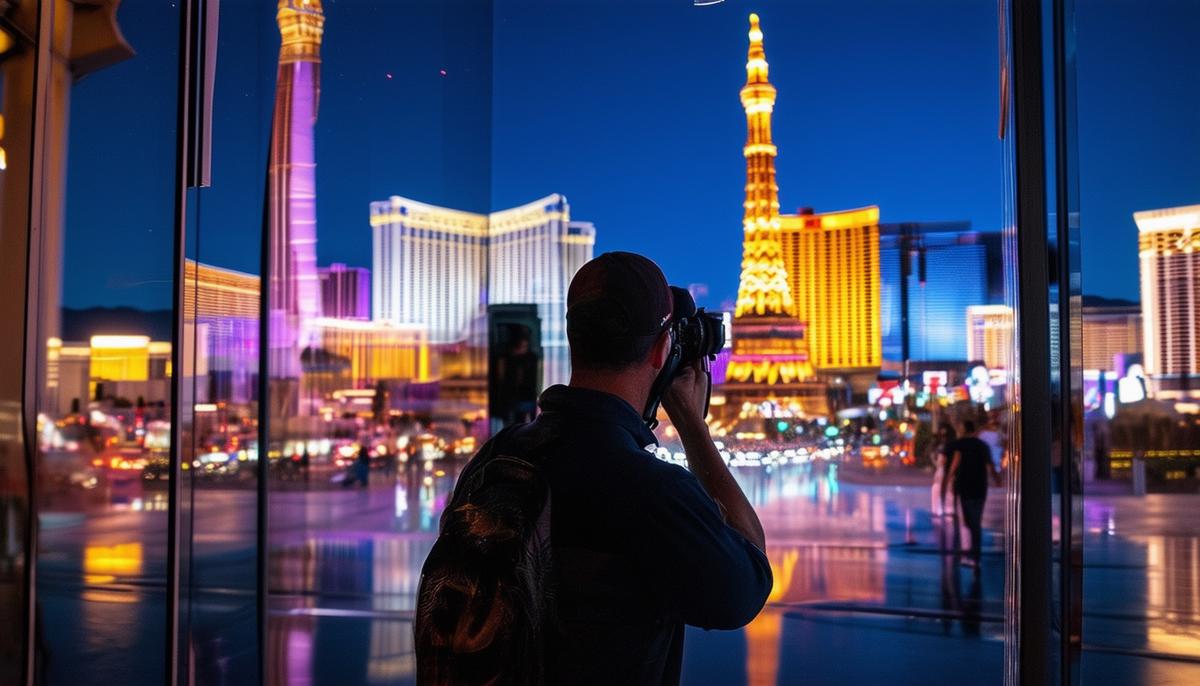
Dealing with glass reflections is a ubiquitous challenge when shooting from within or across panoramic windows and elevated platforms. Reflective surfaces can obscure clarity and introduce unwanted light artifacts. To combat this:
- A polarizing filter helps reduce glares by filtering the light that passes through your lens, ensuring cleaner and crisper images.1
- In cases where carrying extra gear seems cumbersome, draping a dark cloth over the camera and the glass surface you're shooting through can mitigate reflections considerably.
Handling the Crowds
Bustling crowds are unavoidable elements of Las Vegas's vibrant atmosphere but can be navigational nightmares for photographers aiming for clean, isolated shots.
- Shooting during less crowded hours, such as late at night or early morning, can provide relief.
- Observing and blending into your surroundings as locals do often opens up more spontaneous, candid opportunities for capturing the city's essence without rows of heads and shoulders cluttering the scene.
Choosing the optimal time for shooting relies heavily on the "blue hour" — slightly before sunrise and just after sunset. This magical window offers a natural balance where the sky isn't pitch black yet, providing a deep blue backdrop that nicely contrasts the glowing city lights, enhancing atmospheric depth and dimming disruptions caused by harsh neon or street lighting.2
Leveraging local knowledge completes your arsenal for battling urban photography challenges. Engaging with concierges, resident photographers, or bartending staff can yield insider tips on less-known viewpoints or moments when landmarks are unusually less crowded. Treating these exchanges as opportunities to connect and share passions might lead you to invaluable insights or private locations typically reserved for locals or VIPs.
Planning and Preparation for Night Photography Sessions
Prior to stepping out with your camera into the neon glow of Las Vegas for a night photography venture, planning and preparation are paramount. The dazzling light shows and the pulsating nightlife offer a myriad of photogenic opportunities, but they also present unique challenges that can be navigated smoothly with forethought.
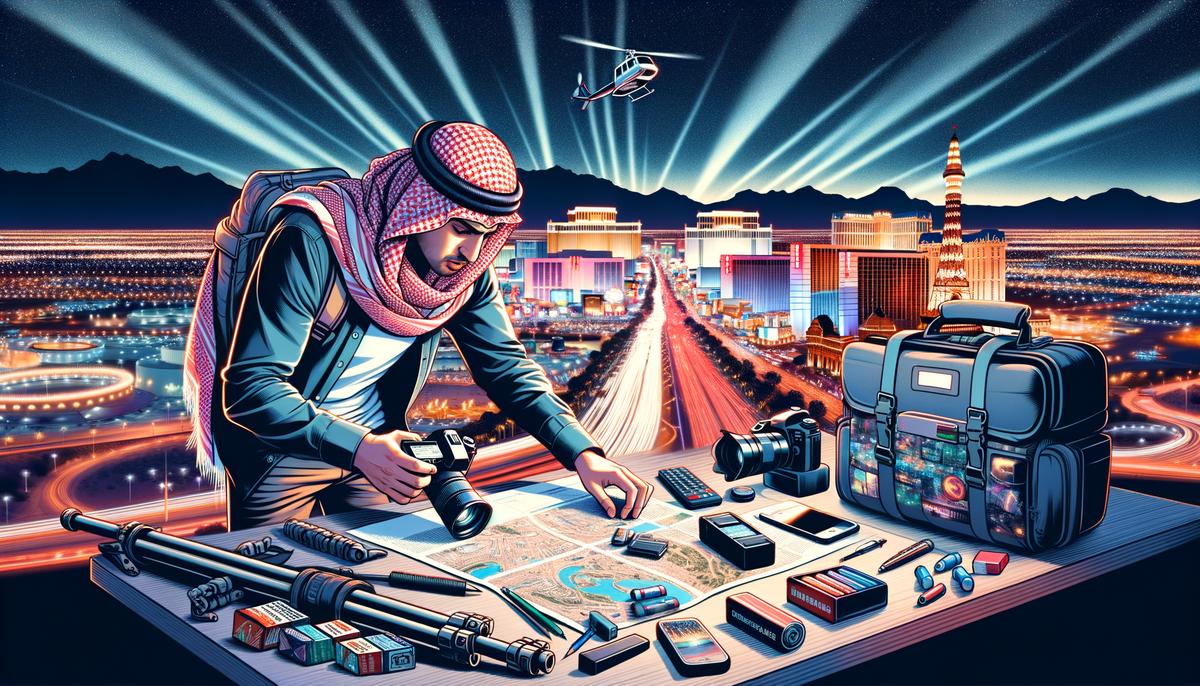
Scouting locations beforehand is crucial. Each location, whether it's the bustling Fremont Street or the serene vistas from the far end of the Strip, offers different challenges and benefits. Visit these spots at different times to observe changes in crowd density, lighting, and overall vibe. The visual grandeur of Las Vegas changes dramatically once the sun sets; sites that appear simple by daylight can transform into elaborate scenes bathed in artificially designed lighting. Utilize online platforms like Google Earth or social media sites for preliminary scouting, but remember, nothing replaces the value of an on-site pre-visit to experience real-time conditions.
Understanding the timing of light shows and other dynamic events like fountain displays or volcanic eruptions at the Mirage can help optimize your shoot timings. These events often occur on a scheduled basis post-sunset, and knowing these schedules allows you to position yourself appropriately and adjust your camera settings in advance. The Bellagio Fountains, for example, provide an impeccable backdrop, but catching the water at just the right moment of their choreographed dance requires timing precision.
The choice of gear is another significant preparatory measure:
- A sturdy tripod is indispensable for managing long exposures that capture the vibrant lights and moving elements without blur.
- A remote shutter release can also prove handy to avoid camera shake.
- Layer your gear with different lenses; wide-angle lenses for breathtaking panoramic cityscapes, and perhaps a faster lens for more detailed shots requiring narrow depths of field.
Having backups can be a lifeline during night photography escapades. Extra batteries are a must; long exposures and extended durations of night sessions can consume more battery power than usual. Similarly, carry additional memory cards to ensure you never run out of storage at a critical moment.
Appropriate clothes and supplies can make or break your night outing. Las Vegas can be deceptively cool at night, particularly in non-summer months; a lightweight yet warm jacket can keep you comfy as you ply your trade through the cool desert night air. Snacks and water are essentials; staying hydrated and energized can keep you alert and focused — key ingredients for a productive photography tour.
By integrating these elements into a well-thought-out plan, you eliminate significant uncertainties regarding environment, equipment, and execution — allowing you to focus purely on crafting shots that express both the kinetic energy and mesmerizing visuals that define Las Vegas nightlife.
- Frost J. The Ultimate Guide to Filters for Landscape Photography. Digital Photography School. https://digital-photography-school.com/filters-for-landscape-photography/
- Rowse D. How to Photograph the Blue Hour. Digital Photography School. https://digital-photography-school.com/how-to-photograph-the-blue-hour/