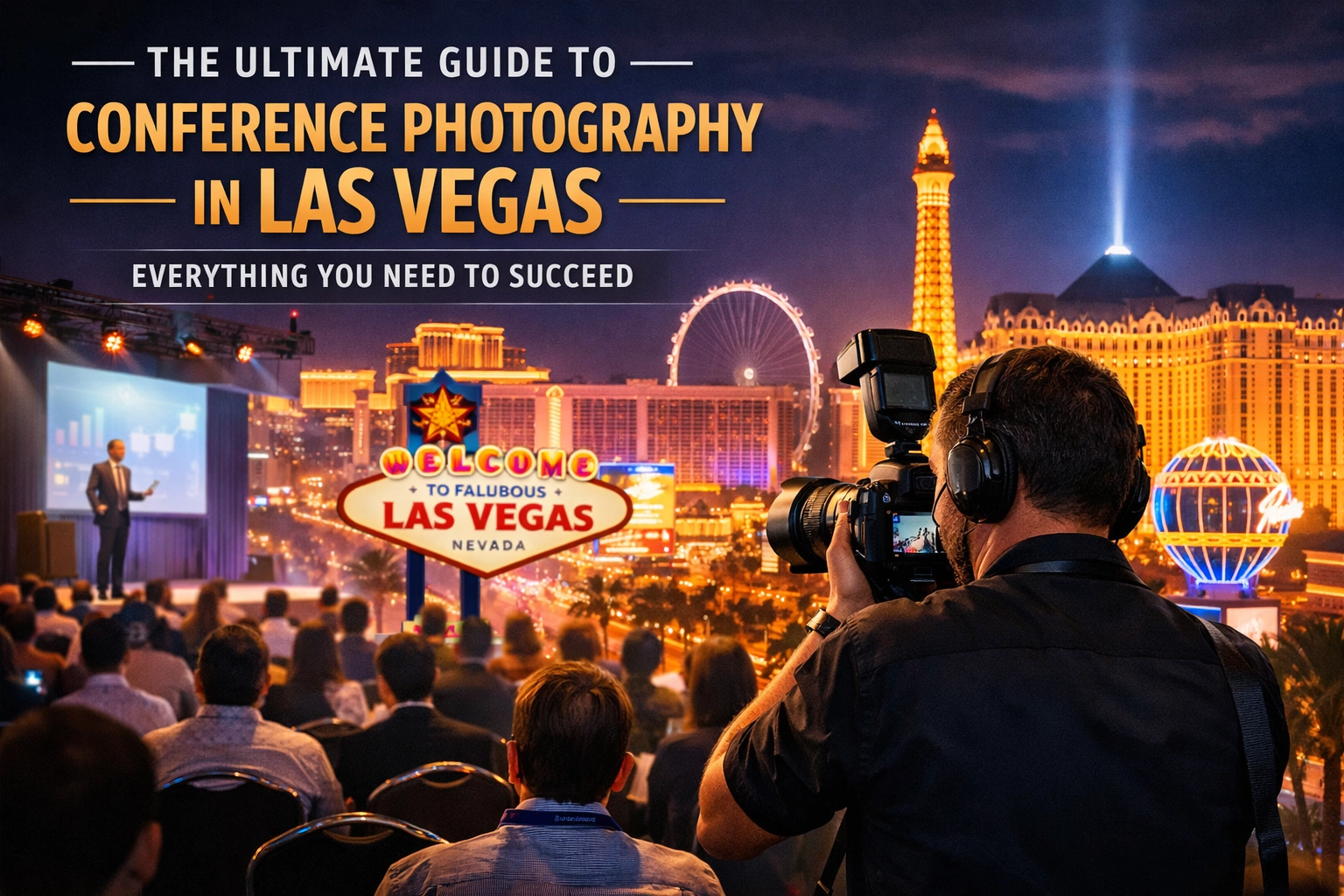
Las Vegas is the undisputed heavyweight champion of the world when it comes to hosting large-scale corporate gatherings. From the sprawling halls of the Mandalay Bay Convention Center to the high-tech spaces at Caesars Forum, the city is a revolving door of innovation, networking, and industry-shaping announcements. But for an event photographer, Las Vegas presents a unique set of challenges and opportunities.
Capturing the essence of a three-day summit amidst the neon glow and windowless ballrooms requires more than just a decent camera; it requires a strategic approach to corporate event photography. Whether you are a marketing manager looking to hire the best corporate photography services or a fellow creator looking to sharpen your skills in the Mojave Desert, this guide covers everything you need to know to produce world-class results.
Why Las Vegas Demands a Different Approach
In most cities, a conference might take over a hotel ballroom. In Las Vegas, a conference takes over a zip code. The sheer scale of venues like the Las Vegas Convention Center (LVCC) means that a conference photographer might walk five to ten miles a day just covering different breakout sessions and keynote stages.
The lighting is another beast entirely. Most Vegas venues are designed to keep people inside, meaning natural light is a rare luxury. You’ll often find yourself battling a mix of tungsten, LED stage lights, and the flickering glow of massive jumbotrons. Mastering business event photography here means being a master of "available light" while knowing exactly when to deploy a subtle fill flash.
Essential Gear for the Vegas Strip
You cannot afford a gear failure when you’re documenting a once-a-year global summit. If you’re providing corporate event photography, your kit needs to be versatile, fast, and reliable.
The Camera Body
At a minimum, you need a full-frame mirrorless or DSLR system that handles high ISO settings gracefully. We often find ourselves shooting at ISO 3200 or even 6400 in darker ballrooms. If your sensor produces too much noise, those professional headshots and keynote captures won’t hold up in a high-res brochure.
The "Trinity" of Lenses
- 24-70mm f/2.8: This is your workhorse. It’s wide enough for environmental shots of the trade show floor and tight enough for most podium shots.
- 70-200mm f/2.8: Essential for conference photography. You often can’t get close to the stage without being a distraction. This lens allows you to capture the speaker’s expressions from the back of the room.
- 16-35mm f/2.8: Perfect for capturing the scale of the venue. When the CEO stands before a crowd of 5,000 people, you need this wide-angle perspective to show the magnitude of the event.
Audio and Video Add-ons
Increasingly, clients are looking for a hybrid approach. While you might be there as a photographer, having a partner who specializes in event videography services is a massive value-add. For high-end cinematic recaps, we often collaborate with the experts at Proshoot to ensure the motion side of the story is just as compelling as the stills.
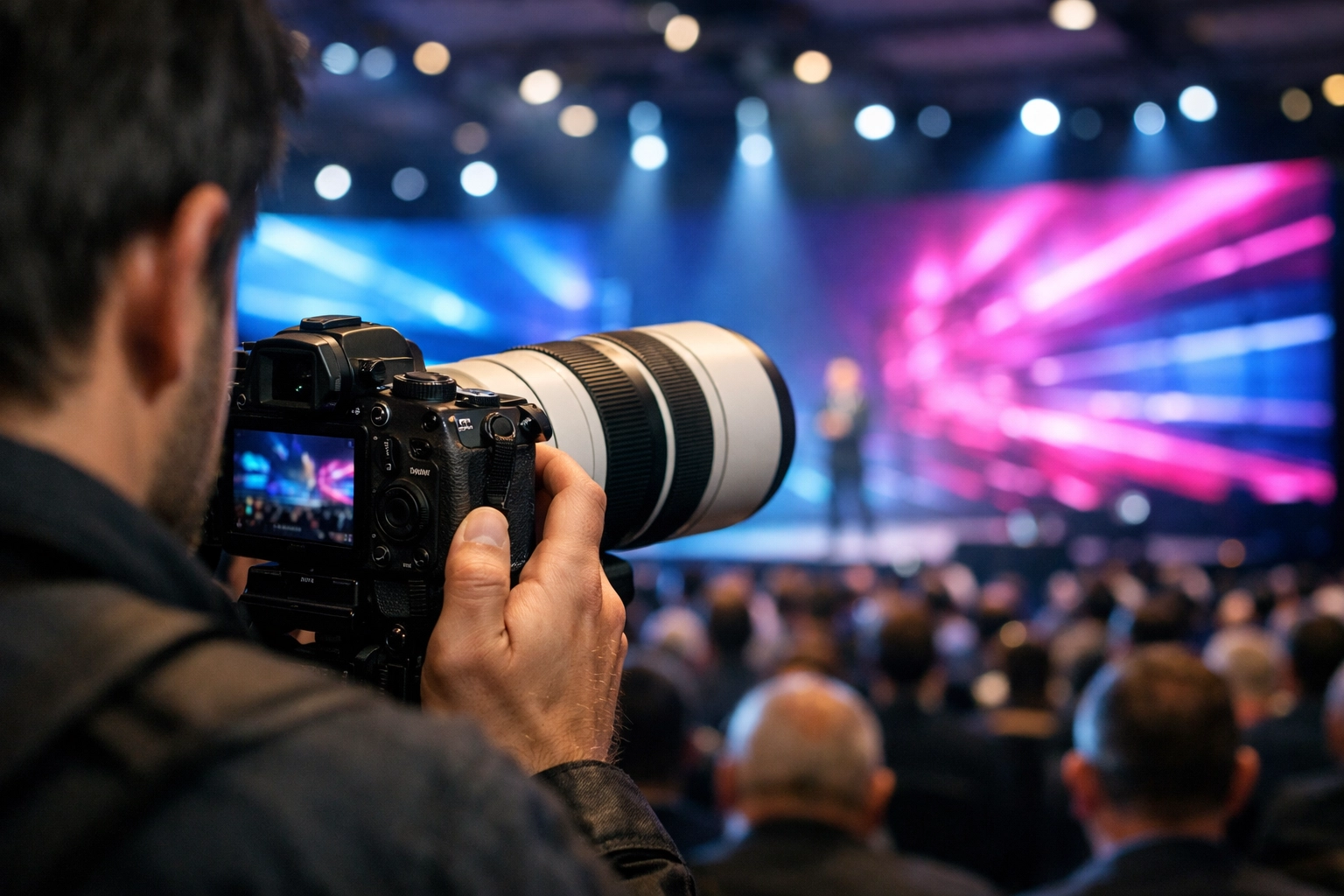
Alt text: A professional event photographer using a 70-200mm lens to capture a keynote speaker on a high-tech stage in Las Vegas.
Technical Settings for Low-Light Excellence
Vegas ballrooms are notorious for "mood lighting," which is great for cocktails but a nightmare for shutters. To succeed in corporate photography services, you need to balance the exposure triangle carefully.
- Aperture: Keep it wide. Shooting at f/2.8 or f/4 allows the maximum amount of light into the sensor and creates that beautiful bokeh that makes a speaker pop against a cluttered background.
- Shutter Speed: Never drop below 1/200th of a second if the speaker is animated. People move their hands and heads constantly; a slow shutter results in "soft" images that are unusable.
- Autofocus: Use Continuous Eye-AF. In a crowded room, your camera needs to lock onto the subject’s eyes and stay there, even as they pace across the stage.
For a deeper look at how we handle complex visual setups, check out our video gallery to see how we balance light and movement in real-time.
The Must-Have Shot List
A professional event photographer doesn't just "show up and shoot." They follow a rigorous mental checklist to ensure every stakeholder, from the social media manager to the sponsors, gets what they need.
1. The Empty Room
Before the doors open, capture the pristine setup. This includes the stage design, the seating arrangements, and any branding on the chairs or tables. Marketing teams need these for future event promotion.
2. The Power Portrait
When the keynote speaker is in the zone, look for the "power shot." This is usually a low-angle shot that makes the speaker look authoritative and inspiring. These are the images that end up in industry magazines and on LinkedIn headers.
3. Candid Networking
The real value of a conference is the "hallway track." Capture attendees shaking hands, laughing at the coffee station, and exchanging business cards. These shots humanize the brand and show the event’s "ROI" in terms of engagement.
4. Sponsor Love
If a company paid $50,000 to have their logo on a charging station, you better believe they want a photo of it. Make a point to document every sponsor activation on the floor.
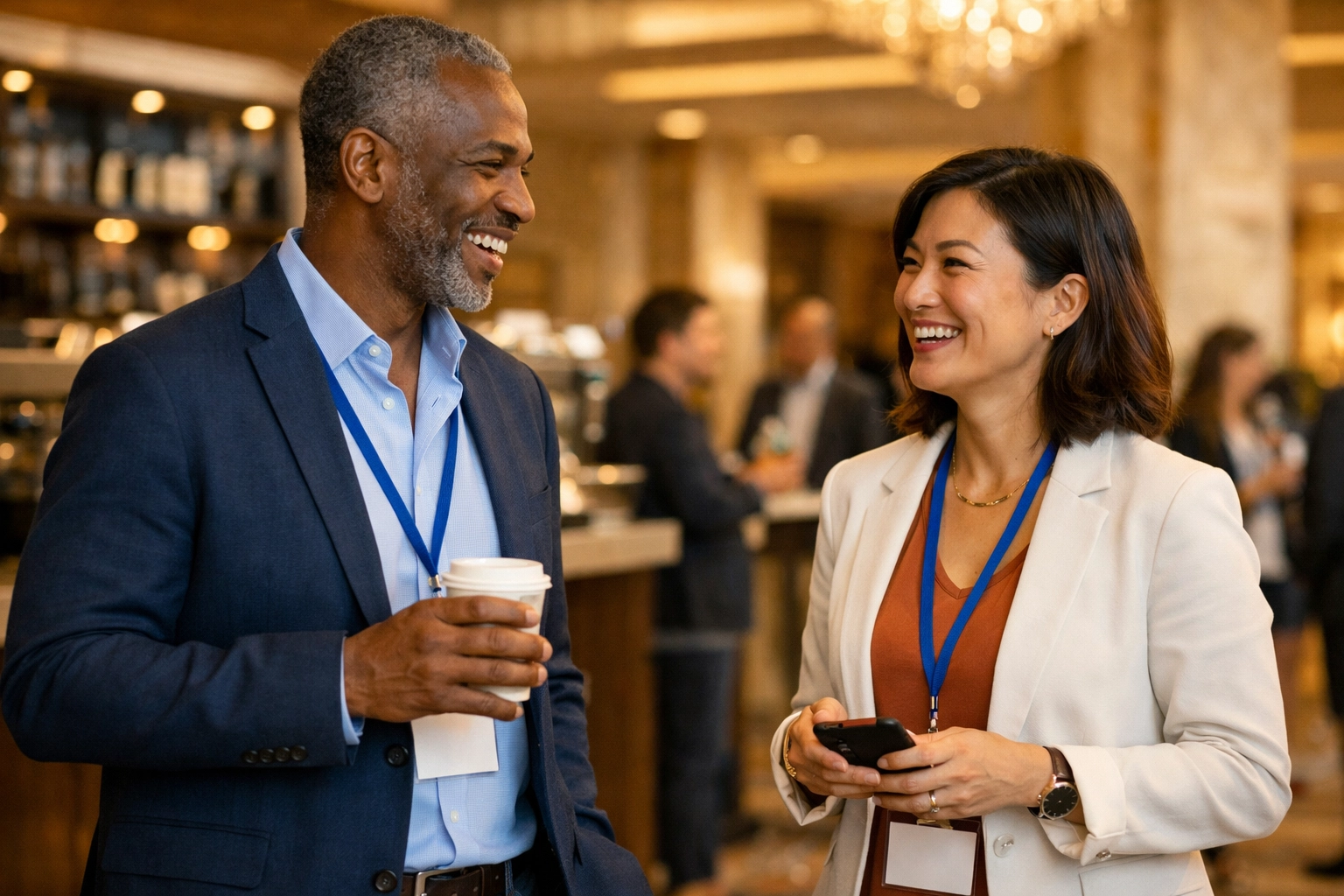
Alt text: Candid shot of two business executives networking during a coffee break at a Las Vegas conference, captured with a shallow depth of field.
Integrating Event Video Production
In 2026, stills are only half the story. The demand for event video production has skyrocketed. Attendees want reels for Instagram, and stakeholders want a two-minute highlight film that captures the energy of the weekend.
When we handle conference videography, we focus on:
- Sizzle Reels: High-energy music, fast cuts, and the best "wow" moments.
- Vox Pops: Short interviews with attendees about their favorite takeaways.
- Session Recording: Full-length event videography services for those who couldn't attend in person.
If you’re looking to scale your event’s reach, integrating a corporate event videographer into your team is non-negotiable. You can see examples of our integrated approach on our home page.
Navigating the Logistics of Las Vegas Venues
Las Vegas is a city built on logistics. If you are shooting at the Venetian or the Wynn, you need to account for transit time. Moving a gear cart from the South Hall of the LVCC to a private dinner at a strip restaurant can take an hour due to traffic and security checkpoints.
Pro Tip: Always carry a printed copy of your credentials and a floor map. Many venues have "dead zones" where cell service is non-existent, and you don't want to be lost in the bowels of a casino when the opening remarks begin.
If you're planning an event and need a local team that knows these hallways like the back of their hand, feel free to contact us for a consultation.
Post-Production and Fast Turnaround
In the world of business event photography, speed is currency. The social media team needs "hero shots" within two hours of the keynote finishing.
We utilize mobile editing workflows to deliver a "Top 20" gallery almost instantly. While the full set of edited images might take a few days, those immediate deliverables are what help an event trend on social media.
For high-volume needs, we often lean on the specialized post-production workflows at Proshoot.io to ensure that every frame: whether video or still: meets the highest professional standards.
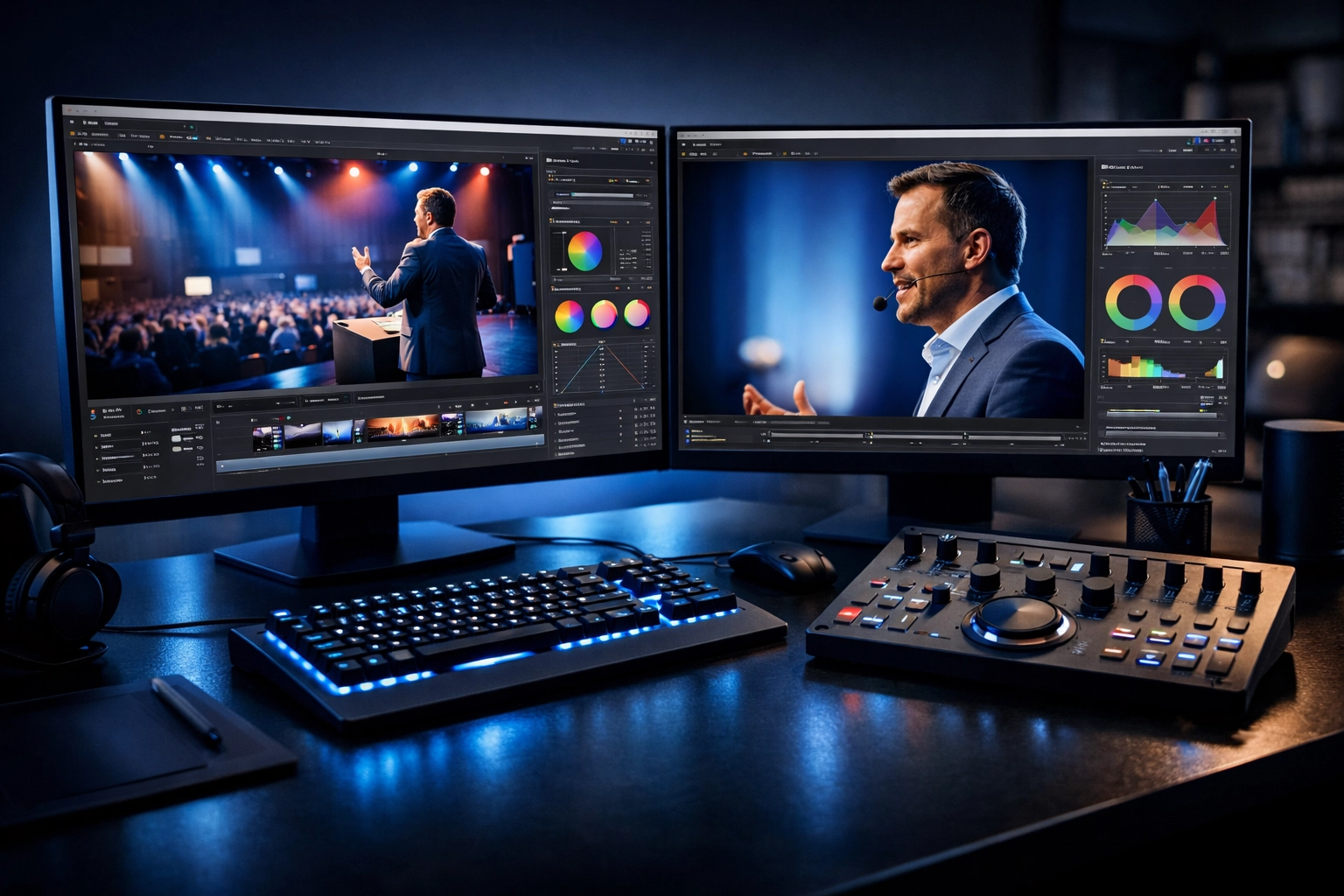
Alt text: A digital workstation showing the professional editing process of corporate event photos, focusing on color correction and brand consistency.
Why Professional Photography is a Business Investment
Some companies try to save money by having an intern take photos on an iPhone. While phone cameras are great for personal use, they fail in professional settings for three reasons:
- Low Light Performance: Small sensors cannot handle the dark ballrooms of Las Vegas.
- Lack of Reach: You can't get a tight shot of a speaker from 100 feet away with a phone.
- Brand Perception: High-quality corporate photography services signal to the world that your event is a Tier-1 industry staple.
Investing in a seasoned conference photographer ensures that the thousands of dollars spent on stage design, lighting, and speakers are documented in a way that preserves their value for years to come.
Choosing the Right Partner in Las Vegas
When selecting a corporate event videographer or photographer, look for a portfolio that shows diversity. You want someone who can handle a 5,000-person keynote just as easily as an intimate 10-person VIP dinner.
At Corporate Pixels, we pride ourselves on being more than just button-pushers. We are visual storytellers who understand the corporate landscape. Whether you need comprehensive event video production or a single event photographer for a half-day session, we bring the same level of professional rigor to every project.
Explore our blog for more insights into the world of professional imaging, or check out our about me page to learn more about Edin Chavez and the vision behind our team.
Final Thoughts for the Road
Success at a Las Vegas conference is 40% gear, 40% planning, and 20% pure endurance. It is a high-octane environment that rewards those who are prepared for anything. By focusing on the "why" behind every shot: why the sponsor needs this, why the attendee will share that: you can move beyond simple documentation and create a visual legacy for your event.
If you're ready to elevate your next Las Vegas event, don't leave your memories to chance. Partner with professionals who understand the rhythm of the Strip and the requirements of the boardroom.
For more information on our services, visit our main site or reach out directly to discuss your specific needs. Let's make your next conference the most visually stunning one yet.