Chicago stands as a global titan for industry gatherings, hosting thousands of high-stakes events annually at venues like McCormick Place and the Hyatt Regency. To capture the gravity and energy of these sessions, a professional event photographer must do more than simply document the day; they must translate the brand's momentum into a visual narrative. This guide provides the definitive blueprint for mastering corporate event photography and conference photography in the Windy City, ensuring your visual assets drive marketing success long after the final keynote.
The Strategic Value of Professional Event Assets
High-quality imagery is a prerequisite for modern business growth. When a company invests in corporate photography services, they are not just buying pictures; they are building a library of marketing collateral. These images serve three primary functions: validating the event’s success to stakeholders, providing content for social media engagement, and creating a visual archive for future event promotion.
In a city as competitive as Chicago, your visual standards must match the scale of your venue. A skilled conference photographer understands that a wide shot of a packed ballroom at the Hilton Chicago communicates "authority" more effectively than any press release ever could. By capturing authentic interactions and high-energy stage moments, you provide the "social proof" necessary to sell tickets for next year's event.
Pre-Event Logistics: Scouting and Strategy
Success in corporate event photography is 70% preparation and 30% execution. Chicago’s diverse architecture means you might move from the modern, glass-heavy environment of the Navy Pier to the ornate, historic ballrooms of the Palmer House in a single weekend.
Conduct a Venue Walkthrough
Schedule a walkthrough 48 hours before the event. Identify the primary light sources: Are there floor-to-ceiling windows creating harsh backlighting? Is the stage using warm tungsten or cool LEDs? Map out your "power positions": the angles that allow you to capture the speaker, the presentation screen, and the audience’s reaction in a single frame.
Align with the Event Schedule
Request the final run-of-show (ROS) from the organizers. Highlight the non-negotiables: the CEO’s entrance, the ribbon-cutting, and the award handovers. A professional event photographer knows that these moments happen in seconds; being out of position is not an option. Ensure you have the names of all VIPs and speakers to facilitate accurate file metadata later.

Alt Text: A professional event photographer scouting a large, empty conference hall in Chicago, planning camera angles and checking lighting conditions before a major corporate summit.
Essential Equipment for the Modern Conference
To deliver top-tier corporate photography services, your gear must be versatile enough to handle the rapid transitions of a live event. Chicago venues are notorious for "mixed lighting": a combination of natural daylight, fluorescent office lights, and colored stage gels.
- Camera Bodies: Always carry two full-frame mirrorless bodies. This eliminates the need to swap lenses during critical moments and provides an immediate backup if one unit fails.
- The Trinity of Lenses:
- 24-70mm f/2.8: Your workhorse for networking, registration, and medium shots.
- 70-200mm f/2.8: Essential for capturing tight, emotional shots of speakers from the back of the room without being intrusive.
- 16-35mm f/2.8: Perfect for showcasing the scale of the venue and large group photos.
- Lighting Tools: Use an on-camera flash with a bounce card for networking sessions, but rely on fast apertures (f/2.8 or wider) for the main stage to preserve the natural ambiance of the production lighting.
For comprehensive coverage that includes motion, many firms now pair their stills with event videography services. A dedicated corporate event videographer can capture the audio and movement that photos cannot, providing a holistic record of the proceedings.
The Comprehensive Shot List: Five Core Categories
To ensure no critical moment is missed, categorize your workflow into these five specific areas. This systematic approach is a hallmark of the best conference photography standards.
1. Venue, Branding, and Detail Shots
Before the doors open, document the "quiet" version of the event.
- The Marquee: Capture the event name on venue signage.
- The Setup: Registration desks, branded lanyards, and swag bags.
- The Room: Wide-angle shots of the empty ballroom to show the production value.
- The Sponsors: Every sponsor logo must be photographed clearly. This is a critical deliverable for the event’s sales team.
2. The Main Stage and Keynotes
This is where the "hero" shots happen. Focus on the interaction between the speaker and the environment.
- The Power Pose: A medium shot of the speaker gesturing with conviction.
- The Context Shot: The speaker on one side of the frame with their most important slide visible on the screen.
- The Audience Reaction: Turn around and capture the "sea of heads" or attendees taking notes. This validates the engagement level of the event.
3. Networking and Breakout Sessions
Candid photos of attendees are the most used assets for social media. Look for "The Trio": three people engaged in active conversation.
- Action Verbs: Photograph people shaking hands, exchanging business cards, or laughing.
- The Demo: If there is an exhibition floor, capture attendees interacting with products or software.
4. VIPs and Executive Portraits
Often, a business event photography contract includes dedicated time for executive headshots.
- Environmental Portraits: Use the venue’s unique Chicago architecture as a backdrop for quick, professional portraits of the board of directors.
- The Handshake: Formal photos of the CEO with award winners or keynote speakers.
5. Award Ceremonies and Milestones
These shots are technically demanding due to fast movement and flashing stage lights. Use a high shutter speed (1/500s) to freeze the action during a trophy hand-off.

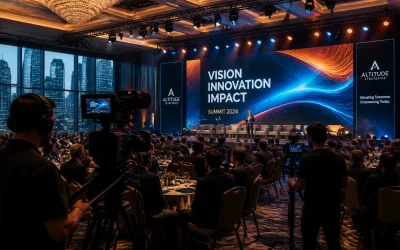
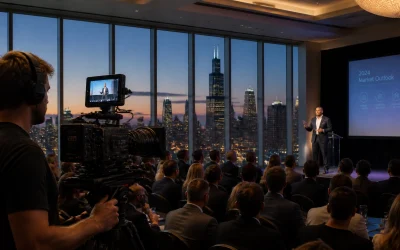
Alt Text: A high-energy keynote presentation at a Chicago business conference, showing a professional photographer capturing the speaker and a large, engaged audience.
Technical Specifications: Mastering the Environment
Navigating the technical hurdles of a Chicago convention center requires a proactive approach to camera settings.
- Shutter Speed: Keep it at or above 1/250s for general movement. For speakers who pace the stage, increase to 1/500s.
- Aperture Strategy: Use f/2.8 to isolate speakers from cluttered backgrounds. For panel discussions, stop down to f/5.6 or f/8 to ensure all participants stay in the focal plane.
- ISO Management: Do not fear high ISO. Modern sensors can handle ISO 3200 or 6400 with minimal noise. It is better to have a sharp, slightly grainy photo than a clean, blurry one.
- Silent Shutter: Enable the electronic shutter during quiet keynote moments or intimate breakout sessions. The clicking of a traditional shutter can be highly distracting in a silent room.
For those looking to expand their visual reach into motion, integrating conference videography is the next logical step. A professional event video production team can utilize these same lighting and composition principles to create highlight reels that amplify your brand's message across YouTube and LinkedIn.
Integrating Photography with Event Video Production
In 2026, the lines between stills and video have blurred. Most high-tier Chicago events now require a hybrid approach. While the event photographer captures the "decisive moment," the corporate event videographer captures the "narrative flow."
When you hire event videography services, you ensure that the wisdom shared on stage isn't lost. Snippets of a keynote can be repurposed into "Social Snaps": 15-second clips perfect for Instagram or TikTok. Combining these with professional stills creates a powerhouse of content. You can see examples of this integrated approach in our project gallery.
Post-Production and Rapid Delivery
In the world of corporate photography services, speed is a currency. Social media teams need "same-day" or "live" delivery to capitalize on event hashtags while they are trending.
- The "Live" Selection: Use a camera with built-in Wi-Fi or an external transmitter to send a curated selection of 10-20 edited images to the client within hours of the opening remarks.
- Consistent Editing: Apply a unified color grade that reflects the brand’s identity. Avoid overly "artistic" filters; stick to clean, true-to-life colors and sharp contrasts.
- Metadata and Organization: Use a logical filing system. Label folders by Day, Session, and Subject. This allows the client to find specific shots of the "CFO Panel" without scrolling through 2,000 images.
For those managing large-scale events, tools like Proshoot can streamline the booking and management of professional creators, ensuring that your event photographer or videographer is vetted and ready for the specific demands of a Chicago venue.

Alt Text: A digital workstation showing the post-production process of editing corporate event photos, highlighting the use of professional software to enhance colors and clarity for a Chicago client.
Why Choose Corporate Pixels for Your Chicago Event?
Navigating the logistics of a major city requires a local expert who understands the heartbeat of Chicago's business districts. At Corporate Pixels, we specialize in high-end corporate event photography and event video production. Whether you are hosting a 50-person executive retreat or a 5,000-person international summit, our team is equipped to deliver world-class assets.
Our portfolio includes everything from luxury sessions for global brands to comprehensive event coverage. We understand that every shutter click is an opportunity to enhance your brand's reputation.
Ready to Capture Your Next Success?
Don't leave your event's visual legacy to chance. Hiring a dedicated conference photographer and corporate event videographer ensures that your hard work is documented with the professional polish it deserves.
Explore our latest projects to see how we’ve helped other businesses succeed in Chicago and across the USA. For a seamless booking experience and access to a network of top-tier visual professionals, visit Proshoot.
Conclusion: Executing the Vision
Mastering Chicago conference photography requires a blend of technical mastery, logistical foresight, and a deep understanding of corporate branding. By following this guide: from pre-event scouting to rapid post-production delivery: you ensure that every attendee, speaker, and sponsor is captured in the best possible light.
In a city defined by its "Big Shoulders" and even bigger ambitions, your photography should reflect nothing less than excellence. Prepare thoroughly, shoot systematically, and deliver with speed. That is the blueprint for success in the competitive landscape of Chicago's corporate events.