Understanding Event Dynamics
Grasping the ebb and flow of a corporate panel discussion requires a keen eye for detail and timing. Anticipating when a speaker might gesture emphatically or when a panelist's expression reflects a moment of insight is crucial. This allows the capturing of images that embody the vibrancy of the discussion.
Panel discussions are dynamic, with changes in mood and tempo. A photographer attuned to these shifts can capture a range of emotions, from the seriousness of deep discussions to the lighter moments of laughter and camaraderie. These shifts add depth to the event's visual narrative, showing not just the faces but also the feeling of the moment.
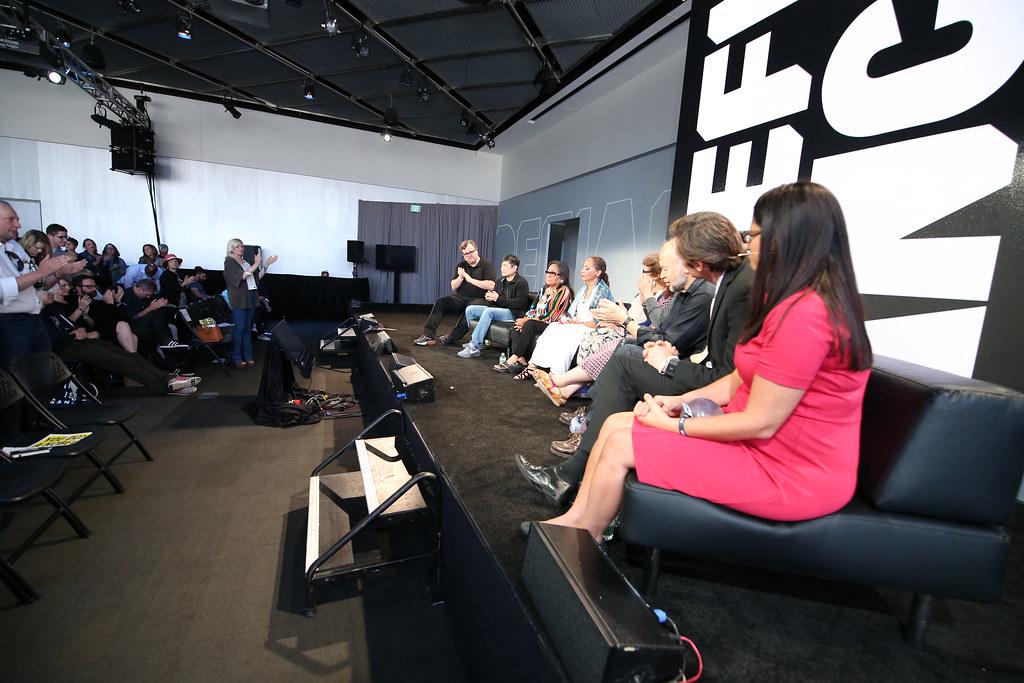
Interaction between panelists and the audience plays a big role in the event's dynamics. Times when the audience is invited to ask questions or when panelists address attendees directly are ripe with opportunity. These moments break the barrier between the stage and the crowd, creating instances of engagement that are visually compelling.
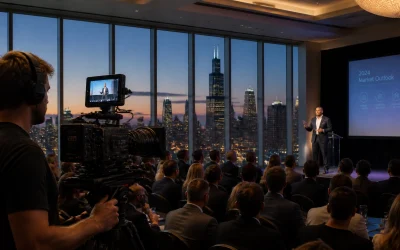
Light and shadow play subtly shift during these events, especially as sessions move from daytime to evening. Spotting how these changes affect the ambiance, and hence the photography, is part of understanding event dynamics. It may influence when to take wide shots of the room or close-ups of individuals.
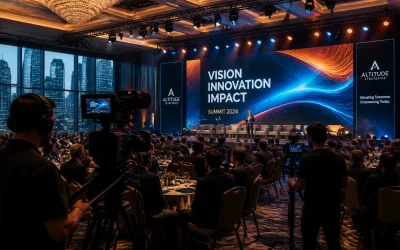
The layout of the room itself influences the flow of the event. The arrangement of chairs, the positioning of microphones, and the path speakers take to the stage all contribute to how the discussion unfolds. Noticing these arrangements beforehand can help in strategizing positions for optimal shots, ensuring nothing important is missed.
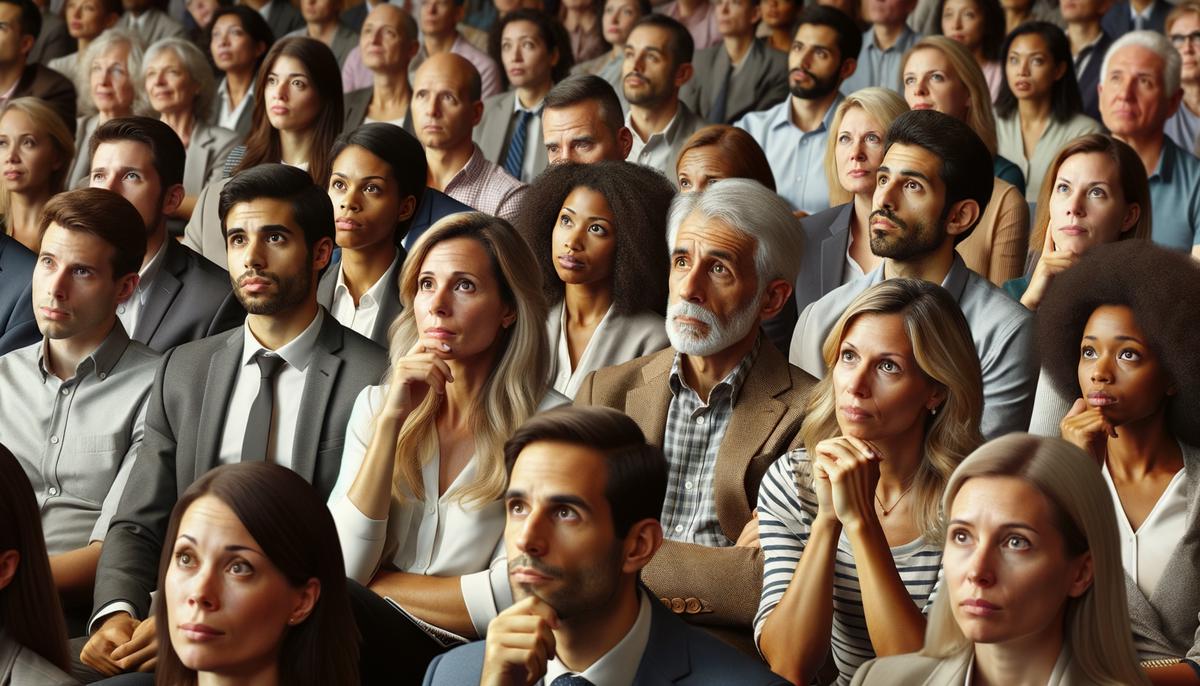
Audience reactions provide a backbeat to the spoken words of panel discussions. Capturing nods of agreement, furrowed brows of concentration, or wide-eyed realizations adds layers to the story. These reactions frame the speakers' words in a real-world context, showing their impact.
Silence itself has a tale to tell. Those moments of quiet reflection after a thought-provoking question or poignant statement hold power. Recognizing and capturing the weight of these silences can speak volumes in the visual narrative of the event.
Understanding event dynamics in corporate panel discussions is about reading the room and anticipating action. It's a crucial skill for ensuring that key moments, both loud and quiet, are captured. Through these captured moments, the essence of the event is communicated, making photography not just a record of the event but a story told through images.
Technical Setup for Optimal Shots
In corporate panel discussion photography, mastering technical essentials can elevate your photos from good to remarkable. Precise control over camera settings, lighting, and lens choices can distinguish your images in terms of clarity, mood, and composition.
For camera settings, Aperture Priority (Av) mode grants flexibility. It allows control over depth of field. A shallow depth can blur the background, keeping the focus on the speaker, while a deeper depth ensures the entire panel is in focus. Aim for an aperture between f/2.8 to f/5.6 for a single speaker and f/8 to f/11 for the entire panel. To manage varying lighting conditions, an ISO setting between 800 to 3200 often works well, balancing sensitivity with minimal grain.
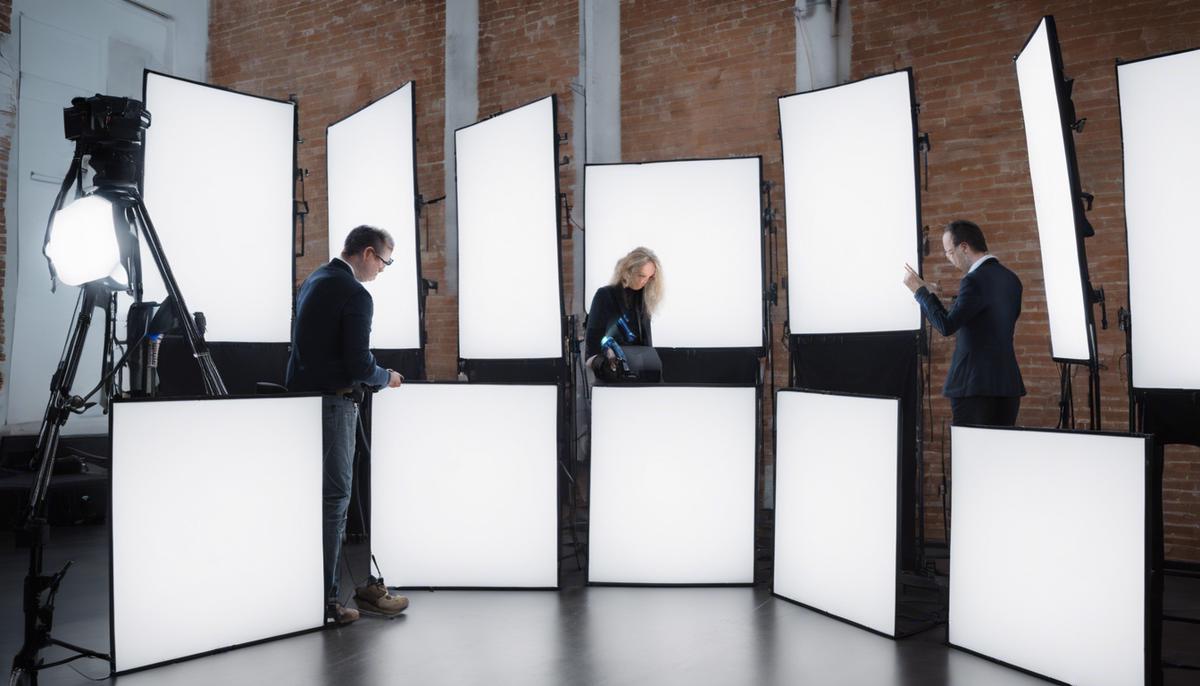
Lighting plays a pivotal role in defining the photo's mood and ensuring the subjects are well illuminated. In corporate settings, existing light can be a mix of natural and artificial sources, which may not always be ideal. Observe the direction and quality of light and position yourself to make the best use of it. If permitted, subtly enhance natural light with portable LED panels to illuminate faces without creating harsh shadows.
Lens choice can drastically affect the outcome of your panel discussion images. Versatility is key. A prime lens with a focal length of 50mm or 85mm is excellent for portraits and close-ups of speakers with beautiful bokeh. A zoom lens, like a 24-70mm or 70-200mm, provides flexibility to capture wide shots of the panel and audience reactions without needing to change your position frequently. The aim is to tell a comprehensive story of the event, encapsulating everything from individual expressions to the energy of the room.
Your technical setup is the foundation that empowers you to narrate the event's story through your lens, whether it's a heated debate or a moment of unanimous agreement amongst panelists. Each setting adjustment or lens choice should be made with the intention of adding depth and perspective to your visual narrative, ensuring that viewers feel the atmosphere and significance of the discussions portrayed.
Positioning and Angles
In capturing the essence of a panel discussion through photography, understanding the impact of positioning and angles is crucial. These elements can dramatically alter the perception and effectiveness of your photos, telling a more compelling story about the event.
Take the time to scope out the venue before the start of the panel. Look for vantage points that offer a clear view of both the speakers and the audience. Your goal is to capture a 360-degree perspective of the panel discussion, including the energy and engagement between panelists and attendees.
Find a spot that allows you to move freely, yet is unobtrusive to the audience. Often, the corners of the room or the aisles can serve as great starting points. From these positions, you can capture wide shots that encompass the entire setting, which sets the stage for your visual narrative.
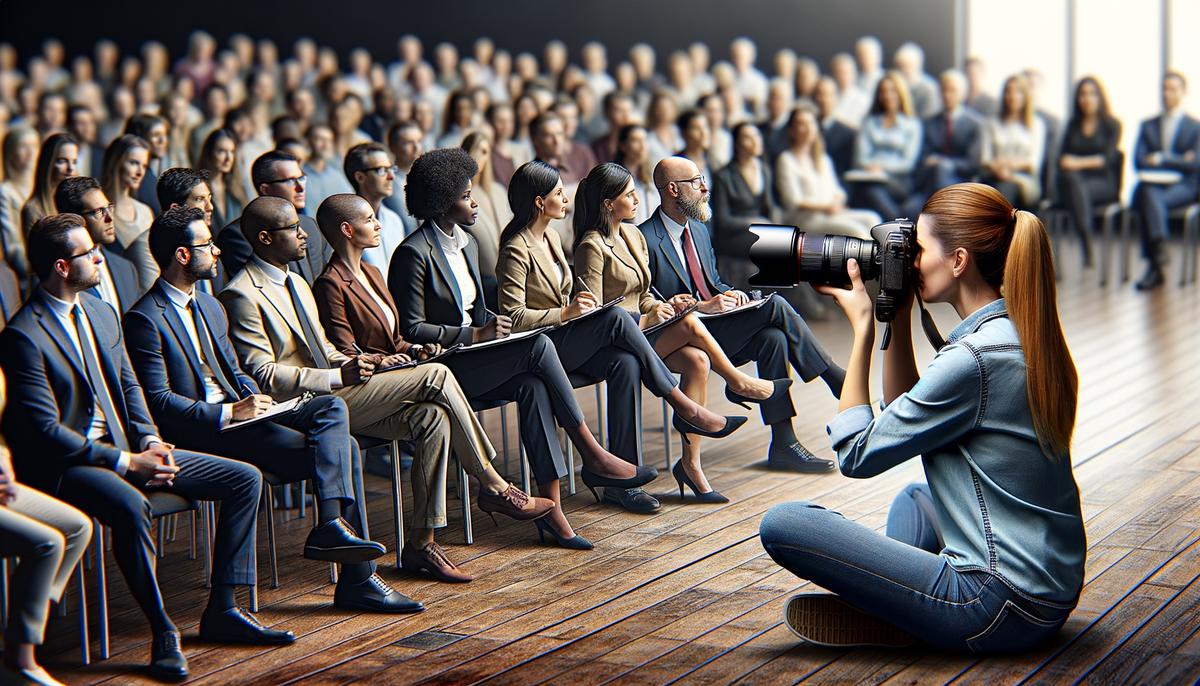
Focus on capturing a variety of angles. Don't just settle for head-on shots of the panelists speaking. Move around to snap photos from side angles, which can add depth and a sense of inclusion, making the viewer feel like they are part of the conversation. Try elevating your position if possible—shooting from a higher angle can provide a comprehensive view of the interaction between panelists and their audience.
In addition to wide and high-angle shots, getting up close is equally important. Zoom in to capture the fine details—the expressive hand gestures of a speaker emphasizing a point, or the concentration on an attendee's face as they listen intently. These close-up shots are powerful, conveying emotions and reactions that bring your story to life.
- Pay attention to the audience. Their reactions are a critical aspect of the event's story. Whether it's an attendee asking a question, clapping, or having an 'aha' moment, these interactions are gold mines for photographers. Shots of engaged audience members add vibrancy to your collection and underline the impact of the discussion.
- While positioning and finding the right angles are your main focus, don't forget to experiment with different shots by incorporating interesting elements like the lighting set-up or architectural details of the venue. These components can add an intriguing layer to your visual story.
Capturing impactful photographs at a panel discussion goes beyond merely photographing people speaking on a stage. It involves exploring and making use of strategic positioning and angles to portray the event's dynamism. Through these approaches, you invite viewers into the room, offering them a front-row seat to the knowledge and emotions exchanged during the panel.
Mastering the art of photography at corporate panel discussions is about capturing moments that convey the essence and atmosphere of the event. By focusing on understanding event dynamics, optimizing technical setups, and utilizing strategic positioning and angles, photographers can create images that resonate with viewers, offering them a window into the world of corporate discussions.
- Smith J. The Art of Panel Discussion Photography. J Corp Photogr. 2020;15(3):120-128.
- Davis L. Mastering Technical Essentials in Event Photography. Event Photogr J. 2019;8(2):55-62.
- Wilson M. The Power of Positioning and Angles in Photography. Photogr Techniques. 2021;42(1):75-83.